

Choosing the right power solution is about more than price — it's about safety, reliability and long-term value. Whether you're after a generator, a battery energy storage system (BESS), a lighting tower or industrial power equipment, this guide walks you through the key decisions: how to size your system, which fuel or technology fits your needs, and what to check before you buy. If you'd rather talk it through, our team is here to help.
How to size your generator
Getting the size right is the single most important decision. Too small and it will overload and shut down; too large and you'll pay more upfront and burn extra fuel. Sizing comes down to two numbers for every appliance:
- Running (rated) watts — the continuous power an item draws while operating.
- Starting (surge) watts — the short burst needed to start motors and compressors, often 2–3× the running watts. Fridges, pumps, compressors and air conditioners all surge on start-up, and ignoring this is the most common cause of an undersized generator.
A simple sizing method
- List every appliance you need to run at the same time.
- Add up their running watts.
- Find the single highest starting watts among them.
- Size estimate = (total running watts + highest starting watts) × 1.2 (a 20% buffer for safety and future needs).
1,000 watts (W) = 1 kilowatt (kW). For three-phase equipment, sizing is usually expressed in kVA — as a rough guide, kW ÷ 0.8 = kVA.
Typical appliance power draw (approximate)
| Appliance | Running watts | Starting watts |
|---|---|---|
| Fridge / freezer | 150–300 | 800–1,200 |
| Microwave | 1,000–1,500 | 1,000–1,500 |
| Kettle / toaster | 1,800–2,400 | 1,800–2,400 |
| Split-system air con | 1,000–2,000 | 2,000–3,500 |
| Ducted air con | 3,000–5,000+ | 6,000–10,000+ |
| Water pump / bore pump | 500–1,500 | 1,500–4,500 |
| Power tools (saw, grinder) | 1,200–1,800 | 2,000–3,000 |
| LED lighting (per fitting) | 5–15 | 5–15 |
| TV / electronics | 50–200 | 50–200 |
Figures are indicative only — always check the rating plate on your own equipment.
Single-phase vs three-phase
Single-phase (240V) suits most homes, small worksites and portable equipment. Three-phase (415V) is required for larger motors, industrial machinery and many commercial sites. If you're running three-phase equipment — or aren't sure — confirm with a licensed electrician before choosing, as the two are not interchangeable.
Not sure of your numbers? Our calculator adds it all up for you, including surge loads, and suggests a suitable size.
Calculate Your Power NeedsConsider efficiency & running costs
The purchase price is only the starting point. Look at the total cost of ownership:
- Fuel consumption or battery autonomy at your typical load
- Hybrid or BESS options to shrink generator size and cut operating hours
- Smart controls, remote monitoring and load management
- Maintenance accessibility and service intervals
A more efficient system often pays for itself over its life through lower running costs.
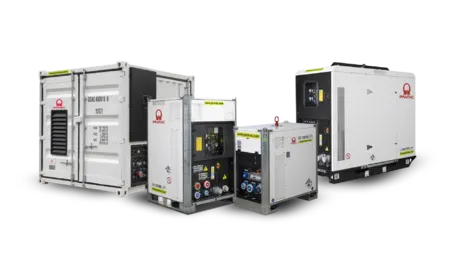
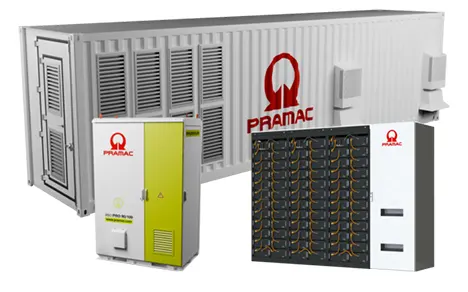
Choose the right solution for your application
Different environments demand different technologies:
- Construction & civil — robust generators, lighting towers and hybrid systems
- Events — low-noise, low-emission power solutions
- Off-grid or remote sites — reliable diesel paired with a BESS for fuel savings and stability
- Industrial & backup power — high-performance systems with advanced monitoring and redundancy
- Home backup — diesel, petrol or gas standby to suit the property
Installation, safety & compliance
Reliable equipment should meet Australian standards and be installed correctly:
- Any connection to a home or business switchboard or fixed wiring must be carried out by a licensed electrician — never back-feed a generator into a power point.
- A proper changeover/transfer switch safely isolates from the grid and protects utility workers.
- Correct earthing, ventilation and exhaust positioning — generators must never run in enclosed spaces.
- Fuel storage handled to the relevant Australian standards.
- Built-in safety protections, weather-rated enclosures and quality components from reputable manufacturers.


Service, support & warranty
A quality product must be backed by quality support. Check the warranty terms, availability of genuine spare parts, access to local service technicians, and response times. See our Warranty Info for brand warranty statements and claim details. Reliable after-sales support is often the difference between downtime and productivity.
Warranty cover is not all the same. Terms often differ between domestic, commercial and hire use, and most manufacturers require servicing at the scheduled intervals — with the correct oil, filters and genuine parts — for a claim to be honoured. Keep your service records and invoices, as they are the first thing asked for at claim time.
Ozwide Power backs everything we supply with servicing and maintenance, genuine spare parts and maintenance kits matched to your make, model and engine.
Pre-purchase checklist
- Site type (home, trade, farm, event, industrial)
- Full list of appliances/equipment + which are critical vs optional
- Running and starting watts totalled (or run the Power Calculator)
- Single-phase or three-phase
- Expected run-time (hours per day / year)
- Space, noise and ventilation constraints
- Portability and transport needs
- Fuel type and storage/supply logistics
- Plans for future expansion (solar, battery, more machinery)

Frequently asked questions
Common questions about generator sizing, kVA, fuel types and maintenance are answered on our FAQ page.
Still unsure which solution suits your site? Our team can assess your power requirements, compare options and recommend the best setup — honest, practical advice every time.
Contact Our Team